For automotive parts distributors, importers, retailers, and service networks, choosing the right windshield wiper blade manufacturer is not only a matter of comparing unit prices. Product consistency, vehicle compatibility, delivery reliability, and technical support all affect customer satisfaction and long-term business results.
A reliable manufacturing partner should do more than supply wiper blades. The right partner should help you build a stable product range, reduce quality risks, respond to market requirements, and support your business as it grows.
This guide outlines the key factors buyers should consider before selecting an OEM wiper blade supplier.
1. Check Product Compatibility and Application Coverage
Wiper blades must match the vehicle’s windshield, wiper arm, connector, length, and driving conditions. A supplier with only a limited product range may not be able to support your customers across different vehicle applications.
Before placing an order, ask the manufacturer for:
- Available wiper blade types and sizes
- Connector and adapter options
- OE reference information
- Coverage for left-hand-drive and right-hand-drive vehicles
- Product recommendations for passenger cars, SUVs, commercial vehicles, and trucks
- Compatibility information for different weather and road conditions
A professional supplier should be able to provide clear application information instead of asking the buyer to rely only on product photos.
2. Evaluate the Quality of Materials and Construction
The visible appearance of a wiper blade does not always show its real performance. Buyers should review the materials and construction used in the main components, including the rubber element, steel strips, frame or beam structure, adapters, and protective coating.
Important questions include:
- What type of rubber compound is used?
- Is the wiping element designed for stable contact with the windshield?
- Are the steel strips resistant to corrosion and deformation?
- Does the connector remain secure during installation and use?
- Has the product been tested for wiping performance and durability?
For beam and hybrid wiper blades, aerodynamic design and uniform pressure distribution are also important. For frame wiper blades, the structure should provide stable pressure across the windshield while remaining easy to install.
3. Review Quality Control and Testing Procedures
Quality control should cover the entire production process, not only the final inspection. A dependable factory normally has procedures for incoming material inspection, production control, assembly inspection, performance testing, and final shipment inspection.
When evaluating a supplier, ask whether it can provide information about:
- Incoming material inspection
- Dimensional and appearance checks
- Connector and assembly inspection
- Wiping performance testing
- Durability testing
- Packaging and carton inspection
- Batch traceability
A supplier that can explain its testing and traceability process is generally better prepared to support long-term distribution programs and private-label projects.
4. Consider OEM, ODM, and Private-Label Capability
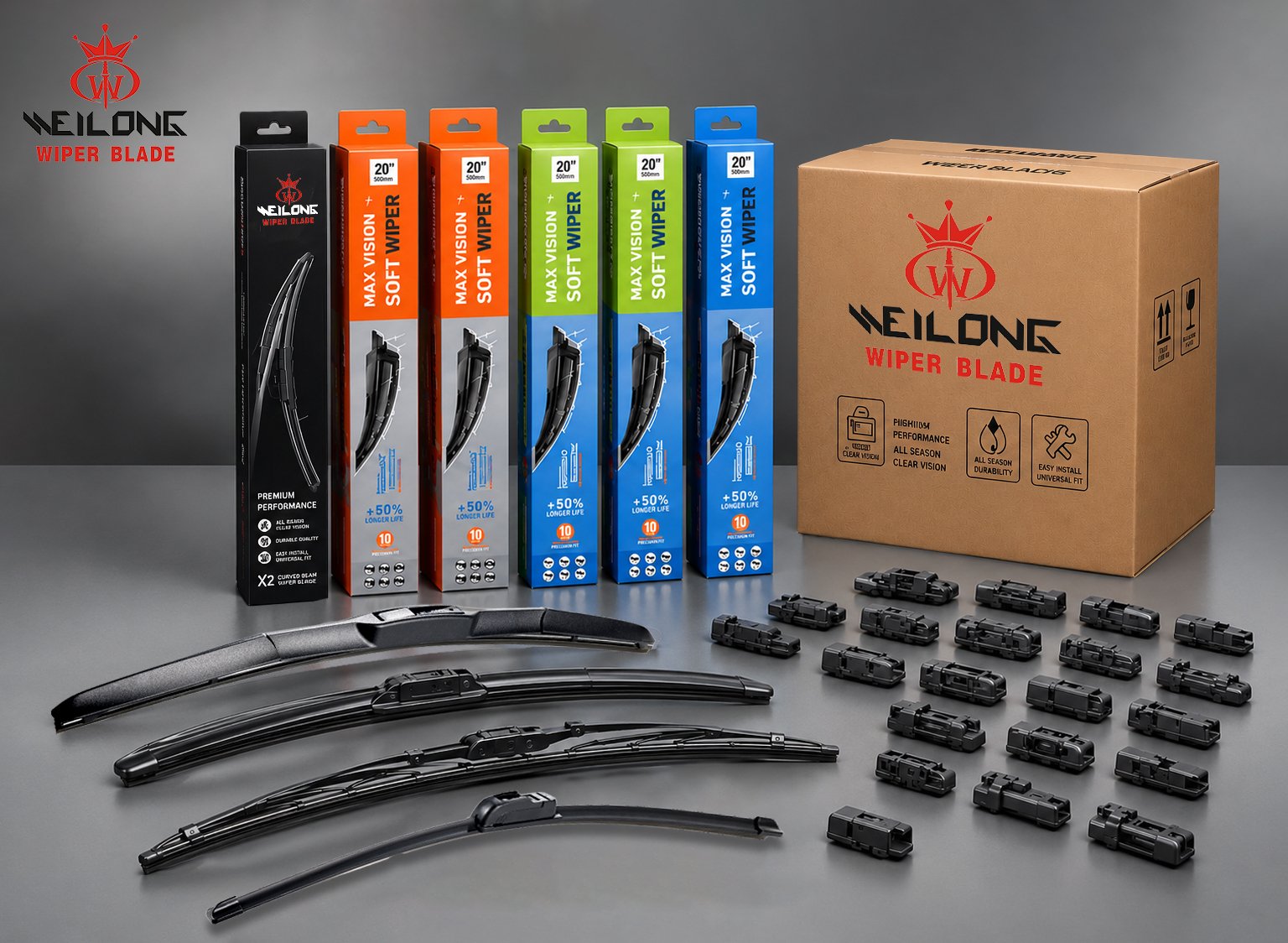
Many distributors need more than standard products. They may require private-label packaging, customized labels, product combinations, special adapters, or a product range adapted to a specific market.
Before choosing a factory, confirm whether it can support:
- Private-label packaging
- Customized carton and label design
- Product and connector combinations
- Sample development
- Small-batch testing before larger orders
- Technical communication in English
- Stable repeat production after approval
Clear communication at the sample stage can prevent misunderstandings about product specifications, packaging, and order quantities later.
5. Confirm Production Capacity and Delivery Stability
A low quotation is not useful if the supplier cannot maintain consistent delivery. Buyers should evaluate both production capacity and the factory’s ability to plan repeat orders.
Useful questions include:
- How is production scheduled during peak seasons?
- Can the factory support both trial orders and repeat orders?
- Are key components kept under controlled supply?
- How are urgent quality or delivery issues handled?
- Can the supplier provide realistic production lead times?
For growing distributors, a manufacturing partner should be capable of supporting the transition from sample orders to regular container or mixed-product orders without compromising quality.
6. Verify Certifications and Manufacturing Experience
Certifications do not replace product testing, but they can help buyers understand how a factory manages quality and production processes. Buyers should verify the certification scope, validity, and relevance to the manufacturing site.
It is also useful to review the supplier’s manufacturing history, export experience, production site, and customer service structure. A factory with long-term experience in automotive aftermarket supply is more likely to understand application requirements, packaging standards, and international buyer expectations.
7. Ask for a Complete Quotation, Not Only a Unit Price
A professional quotation should make the commercial conditions clear. In addition to the unit price, ask about:
- Minimum order quantity
- Price tiers by quantity
- Packaging details
- Sample policy
- Production lead time
- Shipping terms
- Payment terms
- Product customization costs
- Spare parts or replacement policy
Comparing suppliers only by unit price can hide differences in materials, packaging, testing, service, and delivery reliability. A complete quotation makes it easier to evaluate the total purchasing cost and long-term value.
8. Choose a Partner That Supports Market Development
A strong supplier should be able to provide more than a catalogue. Product data, OE references, installation information, images, technical documents, and application recommendations can help distributors create better listings and assist their customers.
This support is especially valuable when entering a new market or developing a private-label range. The supplier should be willing to discuss which product types fit the target market instead of simply offering the same products to every buyer.
Why Manufacturing Capability Matters
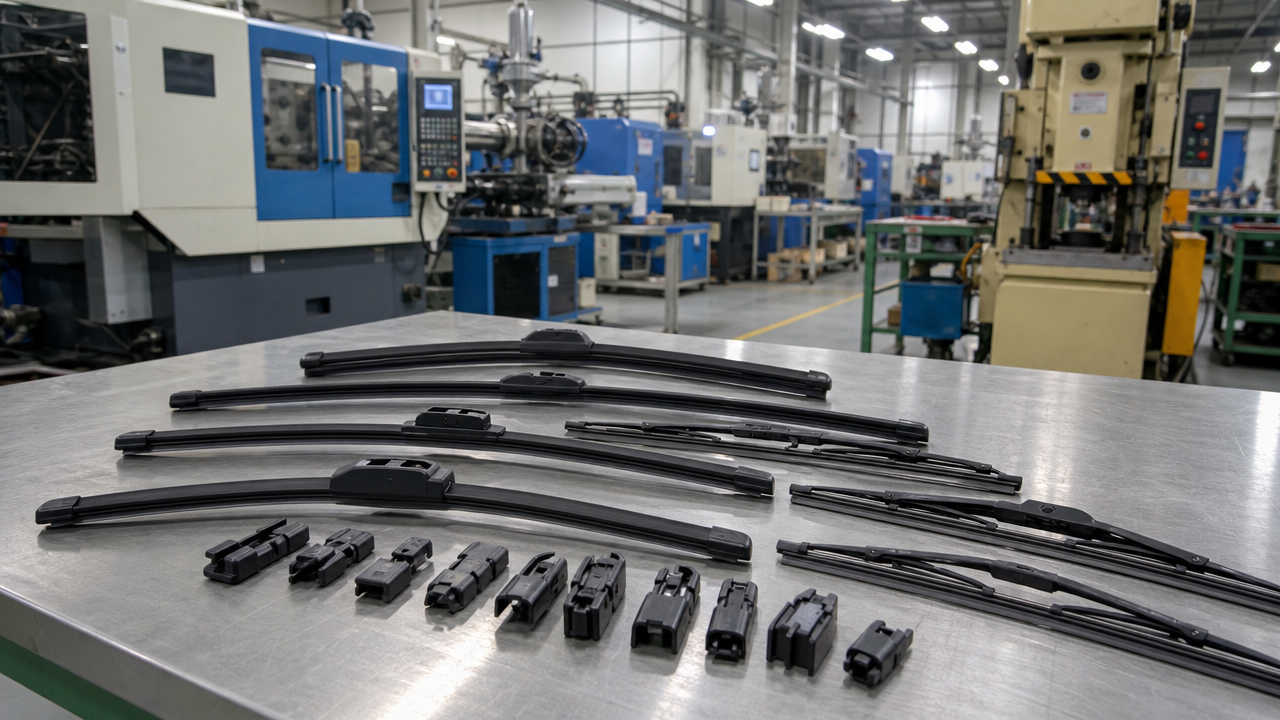
WEILONG Auto Parts is an automotive aftermarket manufacturer focused on windshield wiper blade supply for international buyers. The company was established in 2004 and operates a 30,000-square-meter manufacturing base with more than 20 automated production lines.
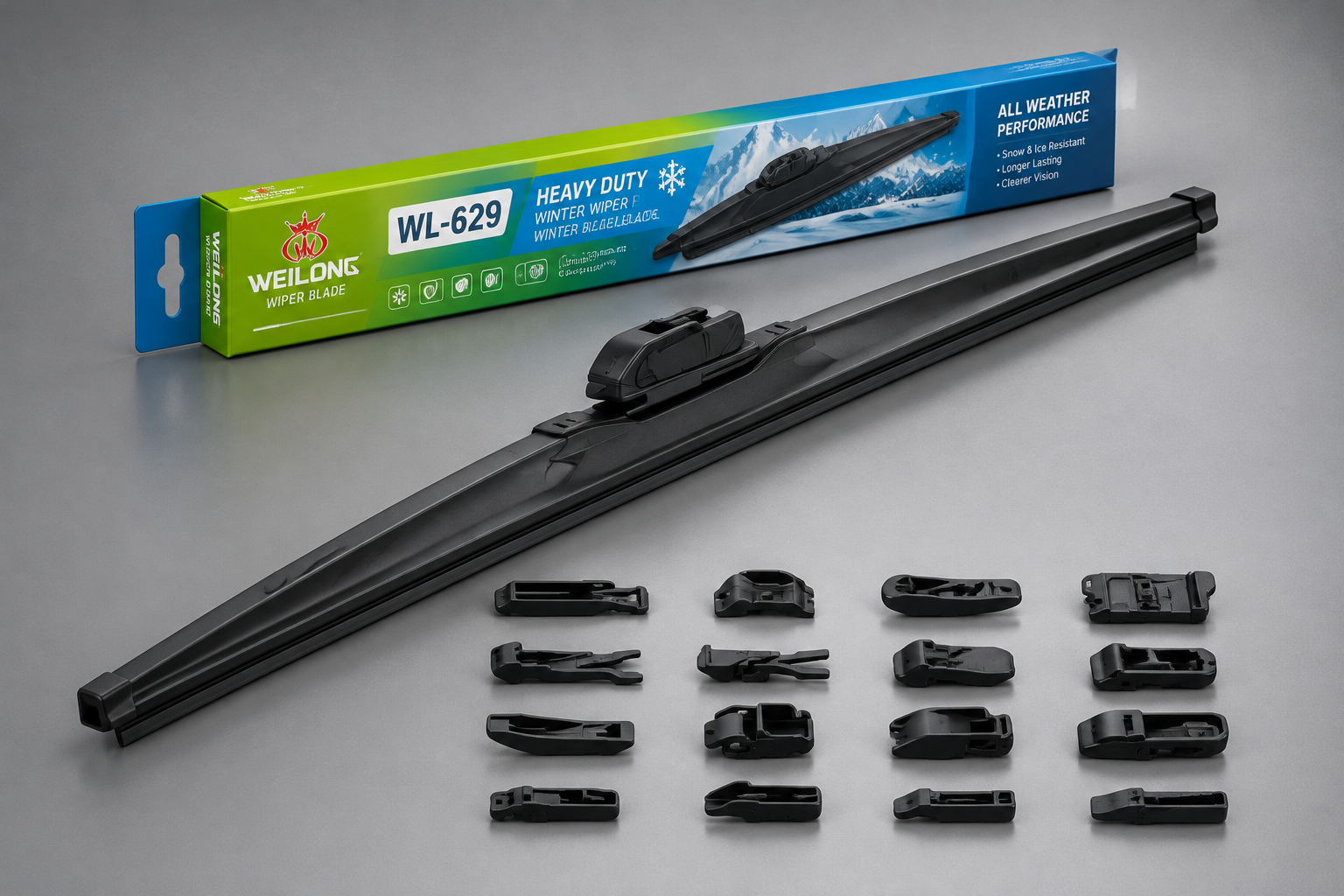
Its product development and manufacturing capabilities cover beam, hybrid, frame, replaceable-strip, winter, and heavy-duty truck wiper blade applications. The company supports OEM and private-label cooperation and provides product information for distributors evaluating different market applications.
WEILONG Auto Parts follows ISO 9001 and IATF 16949 quality-management standards and emphasizes product consistency, application matching, and supply-chain support for global customers.
Final Checklist for Buyers
Before selecting a windshield wiper blade manufacturer, confirm the following:
- Product types and sizes match your target market
- OE and application information is available
- Materials and construction are clearly explained
- Testing and quality-control procedures are defined
- OEM or private-label requirements can be supported
- Production capacity matches your expected order plan
- Certifications and factory information can be verified
- Quotation terms are complete and transparent
- Samples can be evaluated before larger orders
- Communication and after-sales support are reliable
The best supplier is not always the one with the lowest initial price. It is the partner that can consistently provide suitable products, stable quality, dependable delivery, and practical support for your market.
If you are evaluating an OEM or wholesale wiper blade supplier, contact WEILONG Auto Parts to discuss product coverage, packaging requirements, sample evaluation, and factory quotation.