In the competitive automotive aftermarket, offering the right mix of windshield wiper blades is essential for maximizing turnover, minimizing fitment returns, and meeting regional consumer demands. However, distributors, importers, and retail chain buyers frequently face strategic assortment questions:
- Should your catalog prioritize cost-effective traditional frame wipers, aerodynamic beam (flat) blades, or hybrid designs?
- Which wiper architecture best matches modern curved windshields and extreme weather conditions?
- How can a tiered product strategy increase profitability across passenger car, SUV, and commercial vehicle segments?
This technical guide breaks down the core structural differences, performance characteristics, and commercial positioning of the three mainstream wiper blade designs.
1. Traditional Frame (Conventional) Wiper Blades: The Proven Benchmark
Structure & Mechanics
Traditional frame wiper blades utilize a multi-jointed steel superstructure (articulated bridge system) with 4 to 8 pressure contact points. These metal brackets distribute downward arm force along the metal backbone to hold the rubber refill against the glass.
- Key Strengths:
- Cost-Efficiency: Highly economical manufacturing process, ideal for budget-conscious markets and entry-level replacement.
- Flat Windshield Compatibility: Excellent performance on flat or mildly curved windshields commonly found on older vehicle models and light trucks.
- Limitations:
- Vulnerability to Ice & Snow: Open articulated joints easily clog with ice and snow in freezing temperatures.
- Wind Lift at High Speeds: Metal skeleton lacks aerodynamic downforce, leading to chatter and reduced contact pressure above 100 km/h (62 mph).
- Target Aftermarket Segments:
- Fleet maintenance programs, emerging markets, older vehicle parcs, and value-oriented retail tiers.
2. Beam (Flat / Aerofoil) Wiper Blades: The Modern OEM Standard
Structure & Mechanics
Beam wiper blades (also known as flat or frameless blades) feature no external metal brackets. Instead, they incorporate an internal, precision-curved memory steel spring (such as Evodium or dual high-carbon steel strips) encased within an integrated aerodynamic spoiler.
- Key Strengths:
- Infinite Pressure Distribution: The pre-curved steel spine delivers uniform pressure across the entire wiping edge, perfectly matching complex curved windshields.
- Integrated Aerodynamics: The engineered spoiler utilizes oncoming airflow to create continuous downforce, preventing high-speed wind lift and blade flutter.
- All-Weather Resilience: With no exposed joints or brackets, beam blades resist snow, slush, and ice buildup during winter conditions.
- Sleek Low-Profile Aesthetics: Matches the factory aesthetic of modern European, American, and Asian passenger vehicles.
- Limitations:
- Higher tooling and raw material costs compared to traditional frame blades.
- Target Aftermarket Segments:
- Modern passenger cars, premium aftermarket programs, OEM/OES replacement lines, and regions with high rain/snow frequency.
3. Hybrid Wiper Blades: Aerodynamic Style Meets Articulated Stability
Structure & Mechanics
Hybrid wiper blades combine the jointed articulation of a conventional metal skeleton with a fully enclosed, aerodynamic polymer casing. The aerodynamic shell acts as both a protective shield against weather elements and an aerodynamic spoiler.
- Key Strengths:
- OE Style for Asian Vehicles: Standard original equipment on many Japanese and Korean vehicles (Toyota, Honda, Hyundai, Kia, Nissan).
- Enclosed Protection: The polymer shell shields internal pivot joints from road debris, UV radiation, and freezing rain.
- High Aesthetic Appeal: Provides a robust, OEM-grade appearance that commands higher retail margins.
- Limitations:
- Slightly bulkier profile than ultra-slim beam blades; requires precision molding for tight shell tolerances.
- Target Aftermarket Segments:
- Asian vehicle specialists, mid-to-high tier retail shelves, and customers seeking a durable factory-upgrade appearance.
Comprehensive Architecture Comparison Table
| Performance Parameter | Traditional Frame | Beam (Flat) Blade | Hybrid Blade |
|---|---|---|---|
| Pressure Points | 4 – 8 discrete points | Infinite / Continuous | 4 – 6 internal points |
| High-Speed Performance | Prone to wind lift (>100 km/h) | Outstanding (Aerodynamic spoiler) | Excellent (Enclosed shell) |
| Winter & Anti-Icing | Poor (Joints freeze easily) | Superior (No exposed joints) | Very Good (Protected joints) |
| Curved Glass Fitment | Moderate | Exceptional | Good to Very Good |
| Price Point / Margin | Value / Volume | Premium / High Demand | Upper-Mid / High Margin |
| Primary OEM Alignment | Legacy / Commercial fleets | Euro, US & Modern Global OE | Asian OE (Japan / Korea) |
4. Key Engineering Factors Behind Long-Lasting Performance
Regardless of frame architecture, long-term durability and streak-free wiping depend on core component engineering:
- Rubber Compound Formulations:
- Natural Rubber (NR): Superior elasticity and silent operation at moderate temperatures.
- EPDM Synthetic Rubber: Exceptional resistance to ozone, UV degradation, acid rain, and extreme temperature swings (-40°C to +80°C).
- Surface Treatments: Graphite coating, Teflon (PTFE), or liquid silicone coatings to eliminate judder, reduce friction coefficient (<0.1), and extend wiping cycles beyond 500,000 passes.
- Spring Steel Grade:
- High-carbon steel or stainless spring steel with anti-corrosion surface treatments to ensure constant tension memory over 2+ years of operation.
- Multi-Adapter Versatility:
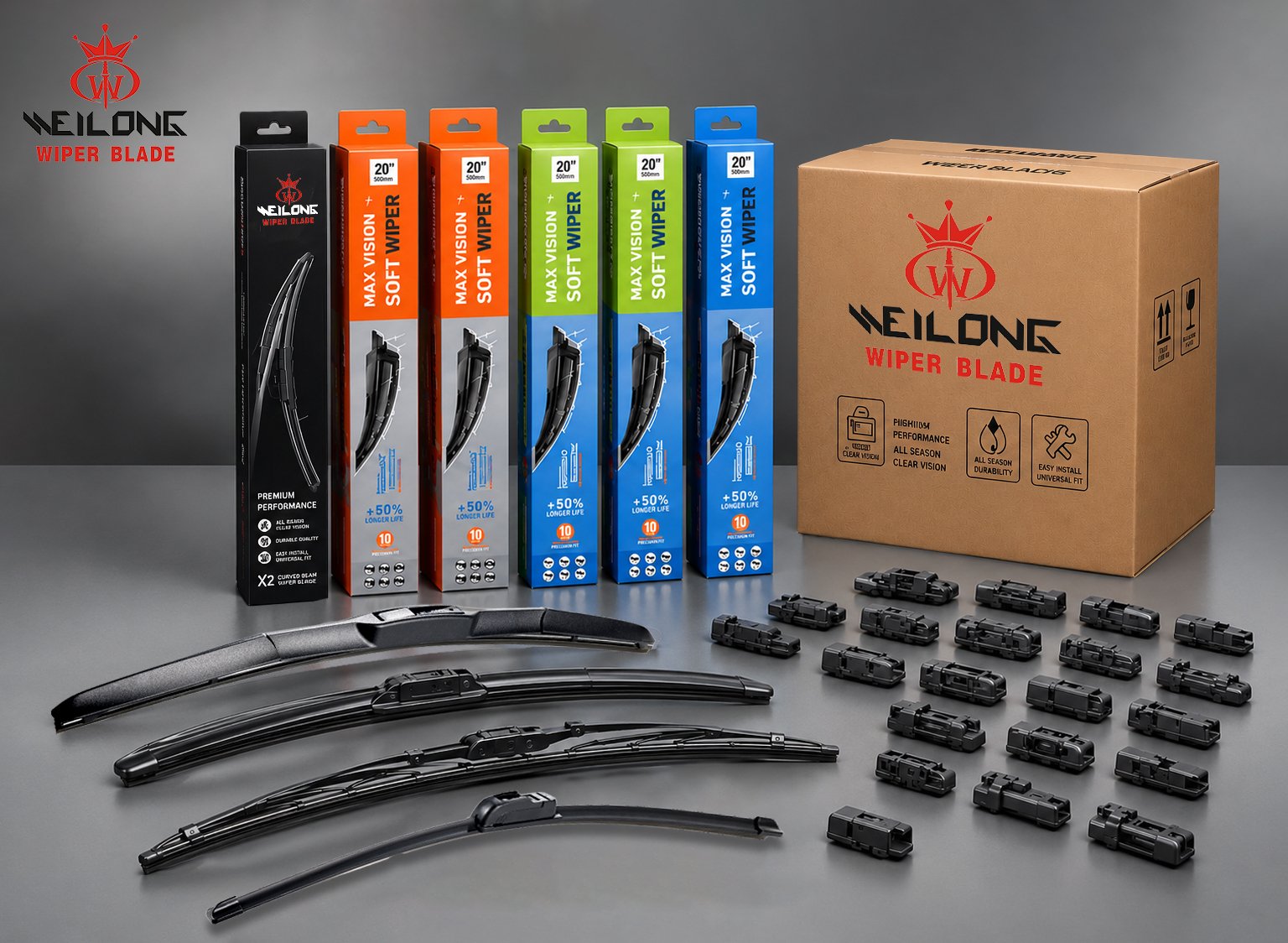
- A comprehensive modular adapter system ensuring 99%+ vehicle coverage across Hook, Side Pin, Pinch Tab, Push Button, Bayonet, and Slim Top Lock arms.
5. Strategic Assortment Recommendations for Global Wholesalers
To maximize inventory turnover and balance margin requirements, we recommend a Three-Tier Catalog Structure:
[Premium Tier]   --> Beam Blades (OE-Grade Aero Spoilers + EPDM / Silicone)
[Mainstream Tier]--> Hybrid & Multi-Fit Beam Blades (Universal Adapters)
[Value Tier]     --> Heavy-Duty Frame Blades (Fleet, Commercial & Value Retail)
By maintaining this tiered catalog, distributors can service both premium OEM-replacement demand and price-sensitive fleet contracts while reducing slow-moving inventory.
Partner with a Precision Wiper Blade Manufacturer
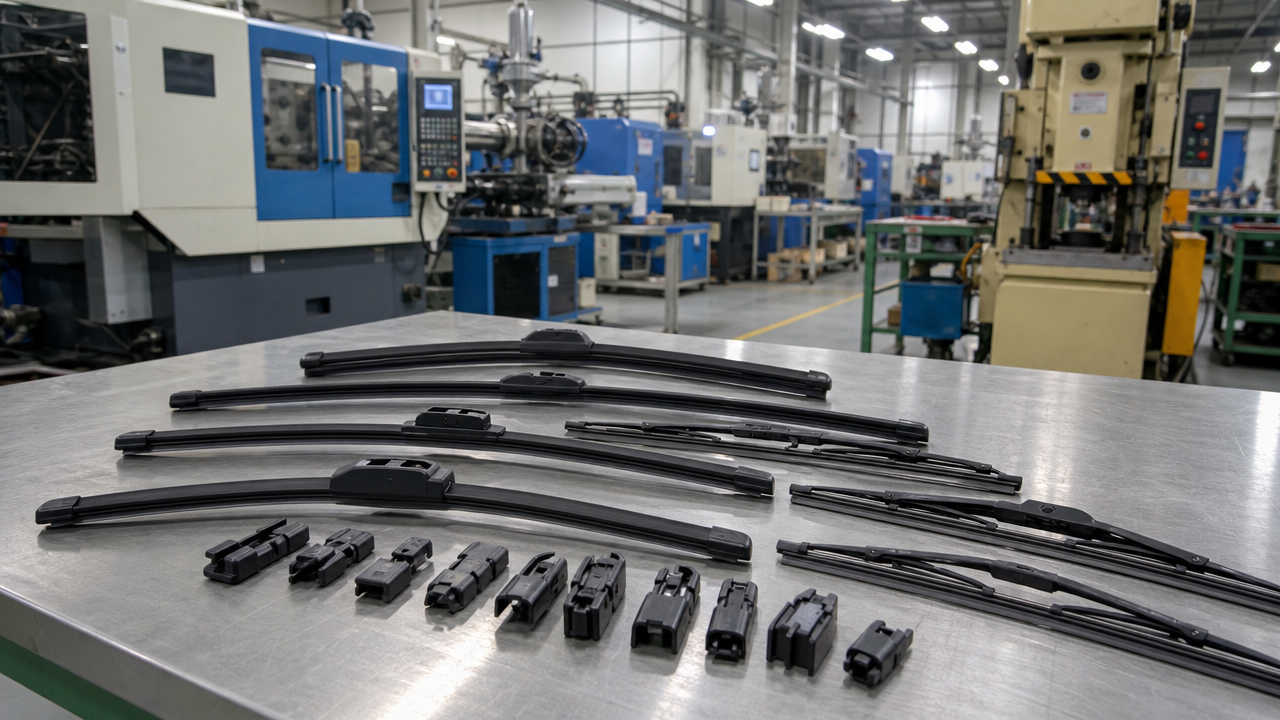
Shandong Weilong Auto Parts Co., Ltd. operates a 30,000 m² automated manufacturing facility with over 20 specialized production lines. As an ISO 9001 and IATF 16949 compliant manufacturer, we produce over 20 million sets annually across:
- Entry, OE-Grade & Replaceable-Strip Beam Blades
- Aerodynamic Hybrid Wiper Blades
- Heavy-Duty Commercial & Truck Wipers
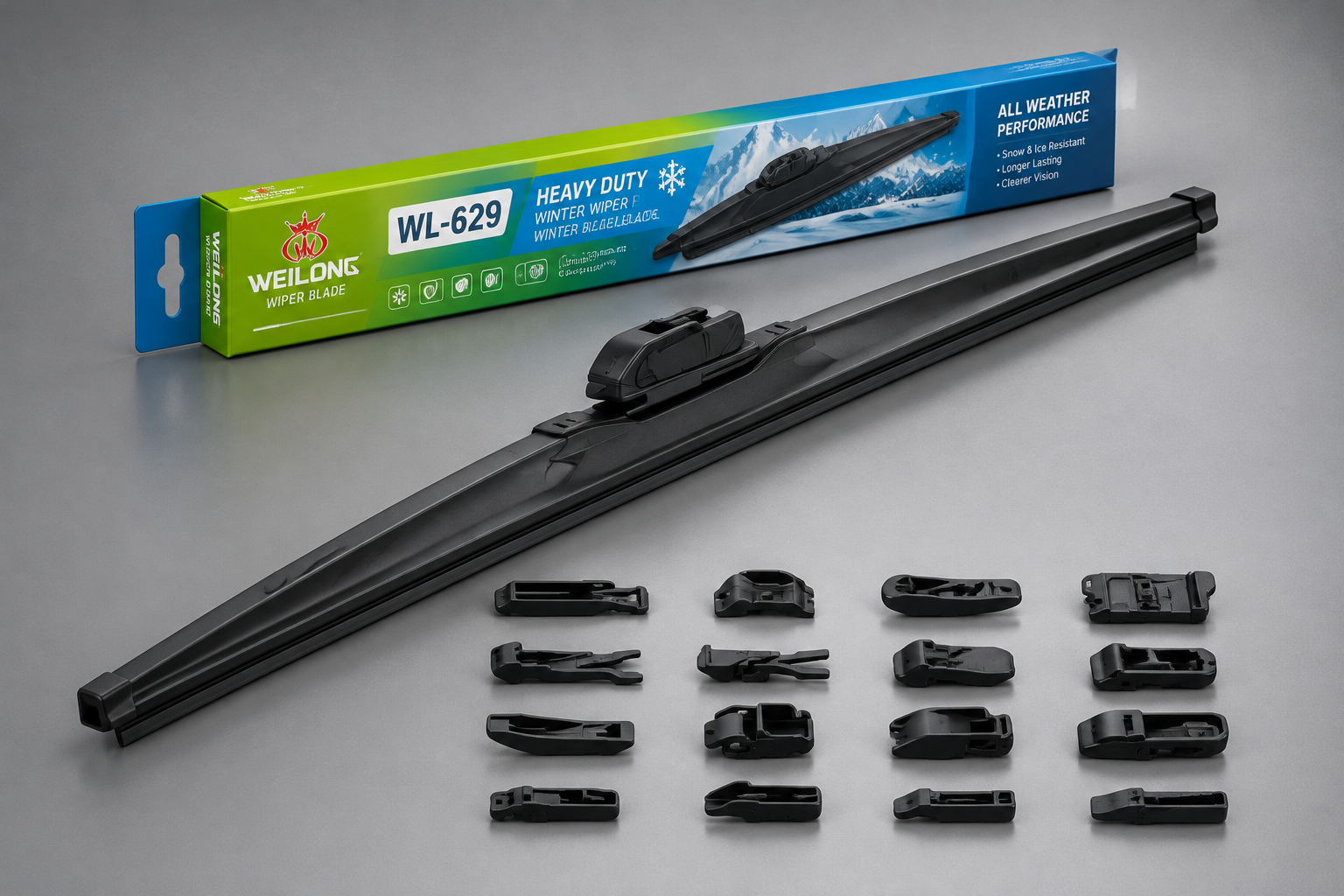
- Winter Snow Blades & Multi-Adapter Systems
We offer full OEM/ODM branding, customized retail packaging, and comprehensive OE reference matching for global importers and brand owners.
Contact our engineering team to request sample kits and factory-direct wholesale pricing: